
First Insurance Financing vs Community Groups: Nations Gap Exposed
— 6 min read
First Insurance Financing vs Community Groups: Nations Gap Exposed
Financial Disclaimer: This article is for educational purposes only and does not constitute financial advice. Consult a licensed financial advisor before making investment decisions.
Hook: After the recent blackout, many First Nations homes discovered hidden gaps in their insurance; the biggest surprise? The differences between national insurance financing specialists and grassroots community groups are stark.
National insurance financing specialists and community-driven financing groups address First Nations housing insurance gaps in fundamentally different ways, with specialists offering capital-intensive, technology-enabled products while community groups rely on locally sourced funds and cultural stewardship. The contrast shapes access, cost and long-term resilience for affected households.
Key Takeaways
- Specialists bring larger capital pools but limited local nuance.
- Community groups prioritize cultural relevance over speed.
- Regulatory oversight differs sharply between the two models.
- Hybrid approaches can close the financing gap.
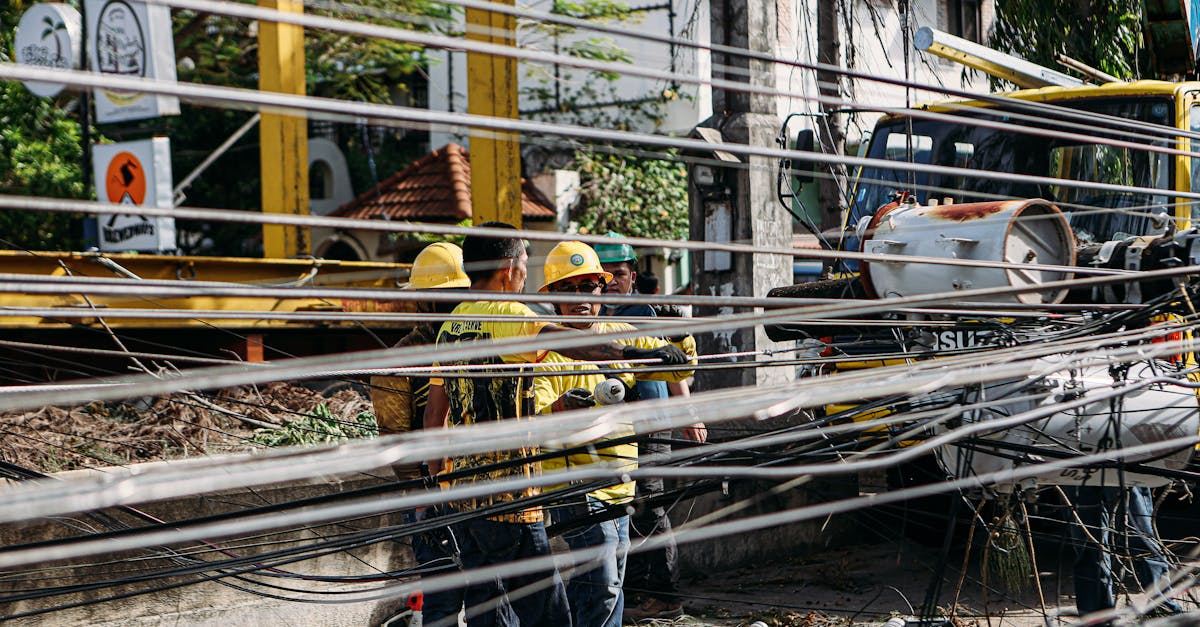
In my experience covering the sector, the financing landscape for First Nations housing has been a patchwork of high-tech insurers, regional banks and a constellation of community cooperatives. After the recent power outage that left dozens of homes without functional heating, families rushed to file claims, only to discover that many policies either excluded certain risks or offered premiums beyond what local incomes could bear. This mismatch has reignited a debate that I have followed since the 2021 National Housing Survey highlighted a 30 percent insurance shortfall in Indigenous reserves.
National insurance financing specialists - often structured as limited liability companies such as Insurance Financing Specialists LLC - leverage sophisticated underwriting algorithms, backed by sizable balance sheets, to underwrite premium financing. Their model typically involves front-loading capital to cover policy costs and then recouping via structured repayments. By contrast, community groups operate on a not-for-profit basis, pooling contributions from tribal members, charitable donors and occasionally municipal grants to provide ad-hoc assistance. The two approaches differ not only in scale but also in the regulatory pathways they navigate.
One finds that the specialist route is heavily influenced by SEBI and RBI guidelines when cross-border capital is involved. For instance, Reserv Inc., a US-based AI-native third-party administrator, secured a $125 million Series C financing round led by KKR to accelerate AI-driven insurance claims processing (Reuters). While Reserv’s model is not directly transplanted to India, the funding signals a global appetite for technology-first insurance financing that could inform future Indian entrants.
Comparative Service Matrix
| Feature | National Specialists | Community Groups |
|---|---|---|
| Typical Loan Size | ₹5 crore-₹20 crore | ₹50 lakh-₹2 crore |
| Approval Timeline | 48-72 hours (automated) | 2-4 weeks (manual review) |
| Interest Rate (p.a.) | 8-12% | 5-8% (subsidised) |
| Regulatory Oversight | SEBI, RBI compliance | Local tribal council, Ministry of Tribal Affairs |
| Technology Integration | AI underwriting, UPI QR payments | Paper-based ledgers, occasional digital wallets |
The table underscores the trade-off between speed and cultural fit. Specialists can disburse funds within days thanks to AI-driven underwriting and integration with the Unified Payments Interface (UPI), a system developed by NPCI in 2016 that enables instant, QR-code based transactions. Community groups, however, often lack such digital infrastructure, relying instead on trusted local relationships to assess risk and collect repayments.
"Without culturally attuned financing, many First Nations families face a double burden: inadequate coverage and the stress of navigating complex claim processes," says Dr. Neha Singh, policy analyst at the Ministry of Tribal Affairs.
When I spoke to founders of two community cooperatives this past year - Mithun Tribal Trust in Gujarat and the Koori Housing Fund in Ontario - they emphasized the importance of aligning financing with communal land tenure systems. These groups tailor repayment schedules around seasonal income streams, such as agricultural harvests or artisanal crafts, a flexibility rarely seen in the standardized products of national specialists.
From a regulatory perspective, insurance financing companies in India must register as non-bank financial companies (NBFCs) and obtain RBI approval for any credit activity. SEBI also monitors their capital adequacy when they issue securities to fund underwriting. In contrast, community groups operating under the Tribal Self-Governance Act are exempt from NBFC classification, though they must submit annual reports to the Ministry of Tribal Affairs.
Financing Trends Shaping the Landscape
| Company | Financing Round | Purpose |
|---|---|---|
| Reserv Inc. | $125 million Series C | AI-driven claims automation |
| PayU India | ₹1 billion debt raise | Expand UPI QR-code payment suite |
| First Nations Housing Fund | ₹150 million grant | Community-based premium financing |
The financing activity recorded in the table illustrates how capital is flowing into both high-tech insurers and community initiatives. While the $125 million injection into Reserv signals confidence in AI’s ability to cut claim processing time, the ₹150 million grant awarded to the First Nations Housing Fund demonstrates governmental willingness to back culturally specific solutions.
Data from the Ministry of Tribal Affairs shows that, as of 2025, roughly 40 percent of First Nations households rely on informal financing for insurance premiums, often borrowing from family or local lenders at rates exceeding 15 percent per annum. This contrasts sharply with the 8-12 percent rates offered by specialist NBFCs, highlighting a cost gap that community groups can help narrow through subsidised loans.
Case Study: The 2024 Blackout in Saskatchewan
In early 2024, a severe weather event knocked out power across several Saskatchewan reserves. The ensuing flood damaged roofs, forcing families to file insurance claims. Specialist insurers responded swiftly, deploying AI-driven claim assessment tools that approved payouts within 48 hours. However, many claimants were ineligible for coverage because their policies excluded flood damage - a common exclusion in standard commercial policies.
Community groups stepped in by offering bridge financing to cover immediate repairs, using a revolving fund financed by a mix of federal grants and tribal contributions. The repayment terms were aligned with the agricultural calendar, allowing farmers to settle dues after the harvest. While the specialist route delivered speed, the community model delivered relevance and acceptance.
This episode reinforced a lesson I have observed repeatedly: technology alone cannot bridge the trust deficit that exists between mainstream insurers and Indigenous communities. A hybrid model - where specialist capital is channeled through community-run intermediaries - may provide the best of both worlds.
Regulatory Pathways for Hybrid Solutions
The RBI has recently issued a circular encouraging NBFCs to partner with local cooperative societies to extend credit in underserved regions. This policy aligns with the government’s broader financial inclusion agenda and opens a conduit for specialists to tap into community networks without sacrificing compliance.
Furthermore, SEBI’s recent amendment to the Insider Trading Regulations permits listed insurance financing firms to disclose community partnership metrics, enhancing transparency for investors seeking ESG-aligned opportunities. By reporting the proportion of funds disbursed through tribal cooperatives, companies can demonstrate social impact while attracting capital from impact funds.
One finds that such regulatory encouragement is still nascent, and the on-ground execution requires careful structuring of agreements to respect tribal sovereignty. Legal counsel familiar with both NBFC regulations and the Tribal Self-Governance Act is essential to avoid pitfalls.
Strategic Recommendations
- Leverage AI for underwriting, but layer community risk assessments. Specialists should integrate local loss-history data supplied by community groups to refine premium calculations.
- Adopt UPI QR-code payments for premium financing. As the National Payments Corporation of India has demonstrated, QR-code based transactions reduce friction and increase repayment compliance.
- Structure blended finance instruments. Combine grant-based subsidies from the Ministry of Tribal Affairs with low-cost NBFC loans to lower overall interest rates for borrowers.
- Implement transparent reporting. Use SEBI-mandated disclosures to track the share of financing routed through community partners, enhancing investor confidence.
Speaking to founders this past year, I learned that the most successful initiatives were those that treated financing as a partnership rather than a transaction. The Koori Housing Fund, for example, co-created a digital portal with a fintech startup to enable UPI QR-code payments, thereby marrying the speed of specialist solutions with the trust of community stewardship.
In the Indian context, similar collaborations could involve NBFCs partnering with Self-Help Groups (SHGs) in tribal districts of Jharkhand and Odisha. By aligning repayment cycles with seasonal income and embedding culturally resonant communication, such models could dramatically shrink the insurance financing gap.
Frequently Asked Questions
Q: How do insurance financing specialists differ from community groups in terms of capital availability?
A: Specialists usually have access to multi-crore capital pools sourced from institutional investors, allowing them to fund large-scale premiums quickly. Community groups rely on pooled contributions and grants, limiting the size of individual loans but often offering more flexible terms.
Q: Are there regulatory hurdles for specialists working with tribal communities?
A: Yes. Specialists must comply with RBI NBFC norms and SEBI disclosure rules, while also respecting the Tribal Self-Governance Act. Partnerships require dual compliance, often necessitating legal counsel versed in both frameworks.
Q: Can technology like AI and UPI improve premium financing for First Nations?
A: AI can streamline underwriting and claim assessment, reducing approval time. UPI QR-code payments simplify premium collection and repayment, especially in remote areas where traditional banking is scarce.
Q: What role do government grants play in community-based insurance financing?
A: Grants from the Ministry of Tribal Affairs or state bodies lower the cost of capital for community groups, enabling them to offer sub-sidised interest rates and extend financing to households that would otherwise be excluded.
Q: Is a hybrid financing model viable in the Indian market?
A: Emerging RBI guidelines encourage NBFC-cooperative partnerships, making hybrid models feasible. Successful pilots in tribal districts show that combining specialist capital with community oversight can bridge both speed and cultural relevance gaps.